
#FindYourself #FindSriLanka
Friday, April 17, 2015
Saturday, April 4, 2015
THE WORLD`S MOST BEAUTIFUL TRAIN TRIP – ELLA TO KANDY

Taking the train is the most comfortable way to travel. You can walk around whenever you want, go to the toilet, have some food, meet other travelers and locals, read, listen to music, relax and watch the landscape go peacefully by. Train travel in Sri Lanka is both a beautiful and affordable way to see the country, and no trip is more scenic than the train from Ella to Kandy, or the reverse train from Kandy to Ella!
The trip to Ella – Kandy. It's pretty long journeys, around 7 hours and it’s amazing scenery along the way!

The railway system in Sri Lanka was initially built by the British in 1864. The main reason was to transport tea and coffee from the Hill Country to Colombo for shipping internationally. Today there are train tracks between some of the biggest cities in Sri Lanka.


Train information, timetables and ticket prices can be found on the Sri Lanka Government Railway Information web side.
Most trains have different government-run classes:
1st class sleeper carries sleeping-berths and are provided on a few overnight trains.
1st class observation car is available on certain daytime trains, mostly on the Main Line, and is very popular among tourists. The observation car provides wide views of the scenery and is normally at the rear of the train but occasionally behind the locomotive.
1st class air-conditioned seats are available on occasional inter-city express trains.
2nd class seats are provided on all inter-city trains and are available as either unreserved seats or reserved seats, where a passenger is allocated a specific seat.
3rd class seats are available on most trains. This class can get very crowded and carries only basic facilities.
There are also two privately run services addition to the above government-run; Rajadhani Express and Expo-rail, which operate on the most popular stretches.
The Ella train station is a peaceful, sleepy and beautiful station!

Next to the train station is a cricket court! Great entertainment while waiting!

The scenery from the train is breathtaking! Like a green carpet of tea bushes rolling by, with colorful sari-dressed tea pickers popping out of the sea of green.


Tuesday, March 31, 2015
History of Sri Lanka

An island in the Indian Ocean off the southeast tip of India, Sri Lanka is about half the size of Alabama. Most of the land is flat and rolling; mountains in the south-central region rise to over 8,000 ft (2,438 m).
Indo-Aryan emigration from India in the 5th century B.C. came to form the largest ethnic group on Sri Lanka today, the Sinhalese. Tamils, the second-largest ethnic group on the island, were originally from the Tamil region of India and emigrated between the 3rd century B.C. and A.D. 1200. Until colonial powers controlled Ceylon (the country's name until 1972), Sinhalese and Tamil rulers fought for dominance over the island. The Tamils, primarily Hindus, claimed the northern section of the island and the Sinhalese, who are predominantly Buddhist, controlled the south. In 1505 the Portuguese took possession of Ceylon until the Dutch India Company usurped control (1658–1796). The British took over in 1796, and Ceylon became an English Crown colony in 1802. The British developed coffee, tea, and rubber plantations. On Feb. 4, 1948, after pressure from Ceylonese nationalist leaders (which briefly unified the Tamil and Sinhalese), Ceylon became a self-governing dominion of the Commonwealth of Nations.
S.W.R.D. Bandaranaike became prime minister in 1956 and championed Sinhalese nationalism, making Sinhala the country's only official language and including state support of Buddhism, further marginalizing the Tamil minority. He was assassinated in 1959 by a Buddhist monk. His widow, Sirimavo Bandaranaike, became the world's first female prime minister in 1960. The name Ceylon was changed to Sri Lanka (“resplendent island”) on May 22, 1972.
The Tamil minority's mounting resentment toward the Sinhalese majority's monopoly on political and economic power, exacerbated by cultural and religious differences, erupted in bloody violence in 1983. Tamil rebel groups, the strongest of which were the Liberation Tigers of Tamil Eelam, or Tamil Tigers, began a civil war to fight for separate nation.
President Ranasinghe Premadasa was assassinated at a May Day political rally in 1993, when a Tamil rebel detonated explosives strapped to himself. Tamil extremists have frequently resorted to terrorist attacks against civilians. The next president, Chandrika Kumaratunga, vowed to restore peace to the country. In Dec. 1999, she was herself wounded in a terrorist attack. By early 2000, 18 years of war had claimed the lives of more than 64,000, mostly civilians.
Una isla en el Océano Índico de la punta sureste de la India, Sri Lanka es aproximadamente la mitad del tamaño de Alabama. La mayor parte de la tierra es plana y rodadura; montañas de la región centro-sur de lugar a más de 8.000 pies (2.438 m).
La emigración indo-aria de la India en el siglo quinto antes de Cristo llegó a formar el mayor grupo étnico en Sri Lanka de hoy, los cingaleses. Tamiles, que es el segundo grupo étnico en la isla, eran originalmente de la región de Tamil de la India y emigraron entre el siglo tercero antes de Cristo y AD 1200. Hasta potencias coloniales controlados Ceilán (nombre del país hasta el año 1972), los gobernantes cingaleses y tamiles lucharon por el dominio de la isla. Los tamiles, principalmente hindúes, reclamó la sección norte de la isla y los cingaleses, que son predominantemente budista, controlaron el sur. En 1505 los portugueses se apoderaron de Ceilán hasta que la Compañía de las Indias usurpado control (1658-1796). El británico se hizo cargo en 1796, y Ceilán se convirtió en una colonia de Inglés Corona en 1802. Los británicos desarrolló el café, el té y las plantaciones de caucho. El 4 de febrero de 1948, tras la presión de los líderes nacionalistas de Ceilán (que unifica brevemente el tamil y cingalés), Ceilán se convirtió en un dominio autónomo de la Mancomunidad Británica de Naciones.
S.W.R.D. Bandaranaike se convirtió en primer ministro en 1956 y defendió el nacionalismo cingalés, haciendo cingalés único idioma oficial del país y que incluye el apoyo del Estado del budismo, marginando aún más a la minoría tamil. Fue asesinado en 1959 por un monje budista. Su viuda, Sirimavo Bandaranaike, se convirtió en la primera mujer primer ministro del mundo en 1960. El nombre fue cambiado a Ceilán Sri Lanka ("isla resplandeciente") el 22 de mayo., 1972
El resentimiento es de minoría tamil hacia el monopolio de la mayoría cingalesa en el poder político y económico, agravado por las diferencias culturales y religiosas, estalló en violencia sangrienta en 1983. Los grupos rebeldes tamiles, el más fuerte de los cuales fueron los Tigres de Liberación del Eelam Tamil, o Tigres Tamiles, comenzó una guerra civil para luchar por la nación independiente.
El presidente Ranasinghe Premadasa fue asesinado en un mitin político del Primero de Mayo en 1993, cuando un rebelde tamil detonó explosivos atados a sí mismo. Extremistas tamiles han recurrido con frecuencia a los ataques terroristas contra la población civil. El próximo presidente, Chandrika Kumaratunga, se comprometió a restaurar la paz en el país. En diciembre de 1999, ella misma era herido en un ataque terrorista. A principios de 2000, 18 años de guerra habían cobrado la vida de más de 64.000, en su mayoría civiles.
Sunday, March 22, 2015
Foods you have to try in Sri Lanka
Koththu Roti

Cooked in a curry sauce, you can find different varieties of koththu roti in Sri Lanka namely, chicken,vegetable or egg koththu. Koththu roti is a dish of cooked godamba roti strips (flat bread strips) with fried vegetables in a curry sauce. The dish has a good strong spice on the palate so be sure to ask for a less spicy version if you are so inclined.
Curd & Treacle
This is a must try dessert during your stay in Sri Lanka. Curd (Mee kiri) is a traditional dessert prepared with buffalo milk and it goes well with palm treacle(kithul pani).
Milk Rice (kiribath)
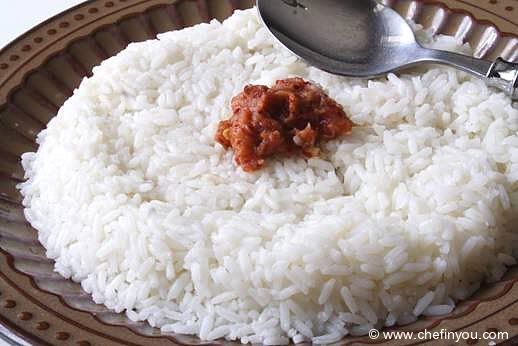
Even if you are not a rice lover, try a little bit of this dish. This is a signature dish for Sri Lanka which is common place in almost all ceremonial occasions.
Short Eats
In Sri Lanka, you can find different snacks or as they are called “short eats”. These bites are a bit spicy and stuffed with a mix of vegetables, fish or meat. They are great to taste with a cup of Ceylon tea and can be good as part of breakfast.
Appa (Hoppers)

Appa is a kind of pan cakes with a soft middle and a crispy outside. In Sri Lanka, you can try this for breakfast, dinner or even as an evening snack. Appa is made with a fermented rice flour & coconut batter and it is cooked in a special round pan.
Comidas que tienes que probar en Sri Lanka
Koththu Roti
Cocinado en una salsa de curry, usted puede encontrar diversas variedades de Koththu Roti En Sri Lanka A saber, de pollo, de verduras o huevo Koththu. Koththu Roti es un plato de platos calientes Tiras Godamba Roti (tiras planas de pan) con verduras fritas en salsa de curry. El plato tiene una buena especia fuerte en el paladar, así que asegúrate de pedir una versión menos picante.
Cuajada y melaza
Esto es algo que debe probar el postre durante su estancia en Sri Lanka. Cuajada (Mee kiri) es un postre tradicional elaborada con leche de búfala y que va bien con la melaza de palma (pani kithul).
La leche de arroz (kiribath)
Incluso si no eres un amante del arroz, pruebe un poco de este plato. Este es un plato típico de Sri Lanka, que es lugar común en casi todas las ocasiones ceremoniales.
Come cortas
Eats cortos
En Sri Lanka, se pueden encontrar diferentes aperitivos o como se les llama "come cortas". Estos aperitivos son un poco picante y relleno con una mezcla de verduras, pescado o carne. Son ideales para degustar con una taza de té de Ceilán y pueden ser buenos como parte del desayuno.
Appa
Appa es una especie de pan pasteles con un centro suave y un crujiente exterior. En Sri Lanka, puedes probar este para el desayuno, la cena o incluso como un bocadillo en la noche. Appa está hecho con una harina de arroz y de coco masa fermentada y se cocina en una sartén redonda especial.
Subscribe to:
Posts
(
Atom
)

